

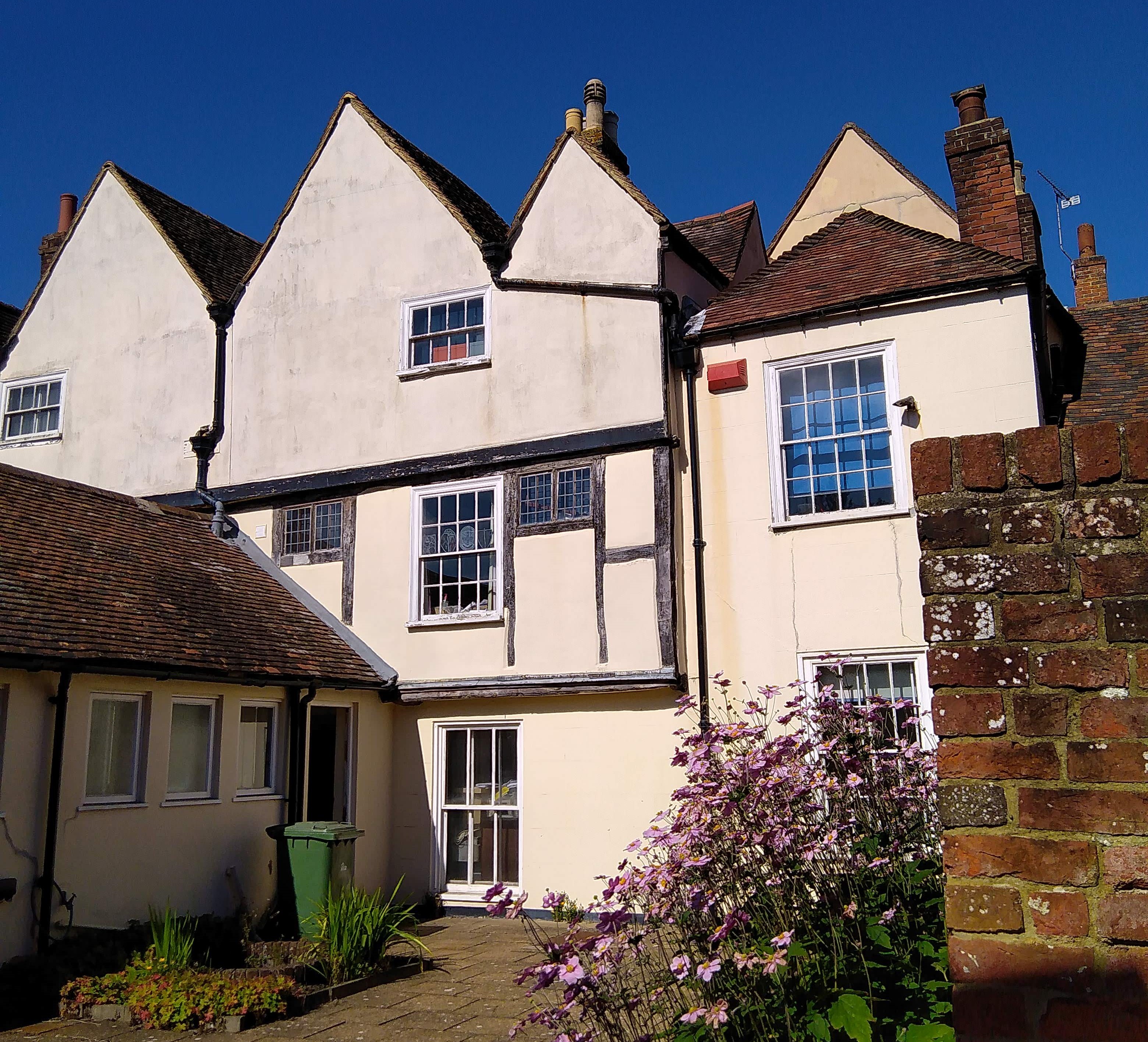
If you are interesting in tracing the history of your house, but don't know where to start, here are some ideas to get you going.
DEEDS
Start with any documentation that you may have about the property, which can provide useful details to start with. Although frustratingly for property research, these do not always survive!
1939 REGISTER
Taken on the eve of the Second World War, this Register was not governed by the same rules as censuses, so is available to the public. Arranged by address, this can prove an excellent starting point for the 20th century, from which to work back in time. Our own address in Northgate, Canterbury, can be found on this source: Susan Matcham was then living at 80 Northgate, and working as a draper, whilst next door at 79 Northgate was the Horton family who were running a grocer's shop.

CENSUS
Like the 1939 Register, census returns are also arranged by address, meaning a manual search of the relevant parish can be made to find a particular property. Census returns were taken from 1841 onwards, although the earlier enumerations often did not include precise house numbers or addresses, which can make searches for a house difficult. Later censuses however tend to include this detail, and the address information from the 1911 census for 80 Northgate is shown here - a female draper was again living there as in 1939, named Elizabeth Thompson.

NEWSPAPERS
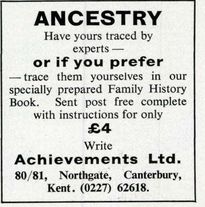
Searching digitised newspaper records can provide a wealth of information on occupants of particular addresses. From birth, marriage and death announcements, to advertisements and even records of criminality, newspapers are an important part of any house history. Searching for any reference to 80 Northgate found an advert for our services, from Country Life Magazine from 4th May 1978 - our telephone number remains almost unchanged!
ENGAGE A PROFESSIONAL
To have expert genealogists research the history of your property, contact us today for a free quotation.