

The Curious Case of the 'worst' Bed?
When most people think about wills, they imagine fortunes, country estates, or perhaps family disputes. But one of the most famous gifts in literary history was far humbler: a bed.
In the will of William Shakespeare, written in 1616, he famously left his wife, Anne Hathaway, his “second best bed.”
For centuries, readers have puzzled over what this meant. Was it an insult? A slight against his wife? Or something more affectionate? At the time, the “best bed” in a household was often reserved for guests. The second best bed was usually the marital bed, being the one shared by husband and wife. So perhaps the bequest was an affectionate one.
But what about the next best bed after the 'second best' one? In one early 17th century the testator gave away his best and second best beds, followed by '...to my sonne John my worst featherbed & Boulster [sic]...'
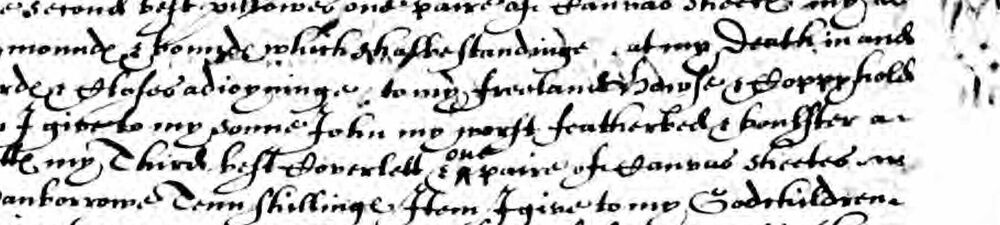
Historically, beds were valuable possessions, and so presumably even the 'worst' bed was a useful item of worth to be left. Although what John thought about this bequest we will never know!