
Before 1752 when the Gregorian calendar replaced the Julian calendar in England and Wales (Scotland having already moved over to it in 1600), the ecclesiastical year began on Lady Day, being 25th March. This means that when recording events such as baptisms, births, marriages, death and burials which took place in the first three months of the year before 1752, two years should be given to represent both the old and new styles of dating.
How parish registers record dates is inconsistent. Usually the new year is shown after 25th March, although not always prior to 1752 - and sometimes the new year is shown as 24th March even after the introduction of the Gregorian calendar.
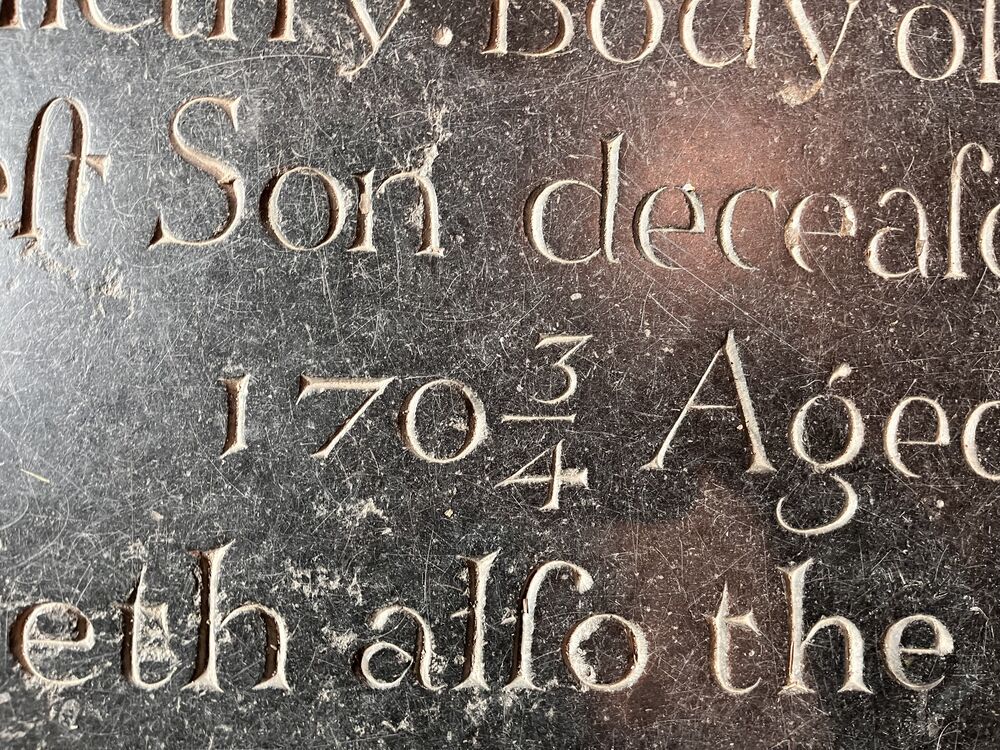
Double dating is most commonly utilised by genealogists when recording events from parish registers, but of course it is relevant for recording any date between January and March prior to 1725. St Dunstan's church in Canterbury was visited this week by our research team, where the use of double dating was noted on a memorial inscription for the Huguenot family of Claude Rondeau. His son died on 18th March 1703/4.
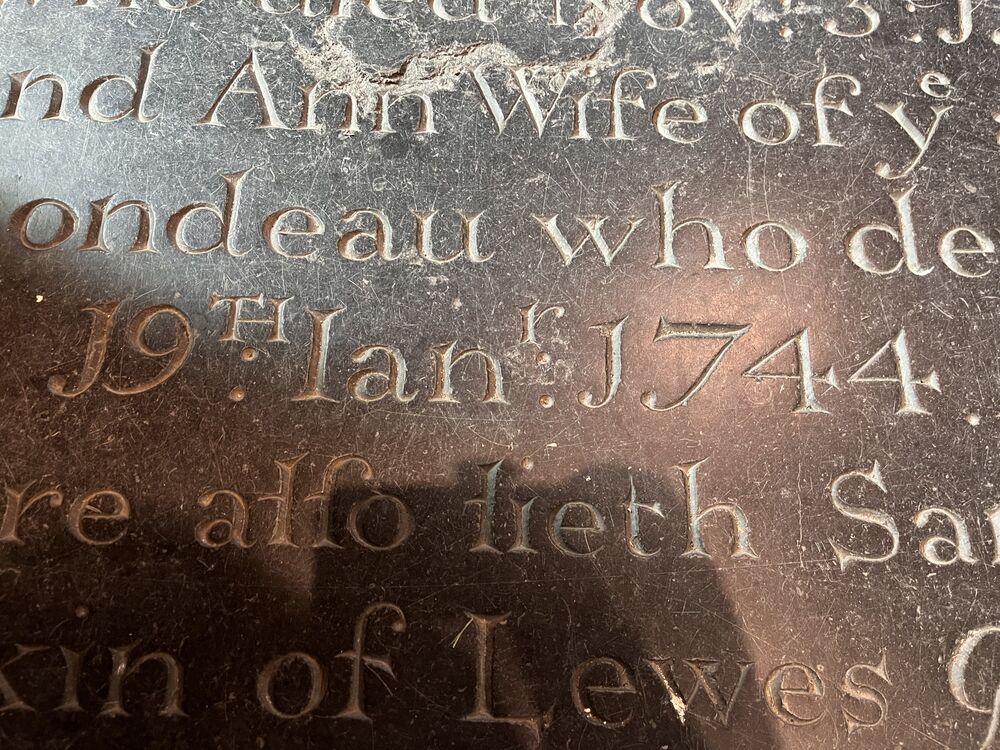
However, the same memorial inscription revealed another death date, this time given as 19th January 1744 with no double dating utilised.
It just goes to show that even on the same source, date format can be inconsistent!